
What Makes a Roof Good or Bad for Solar?
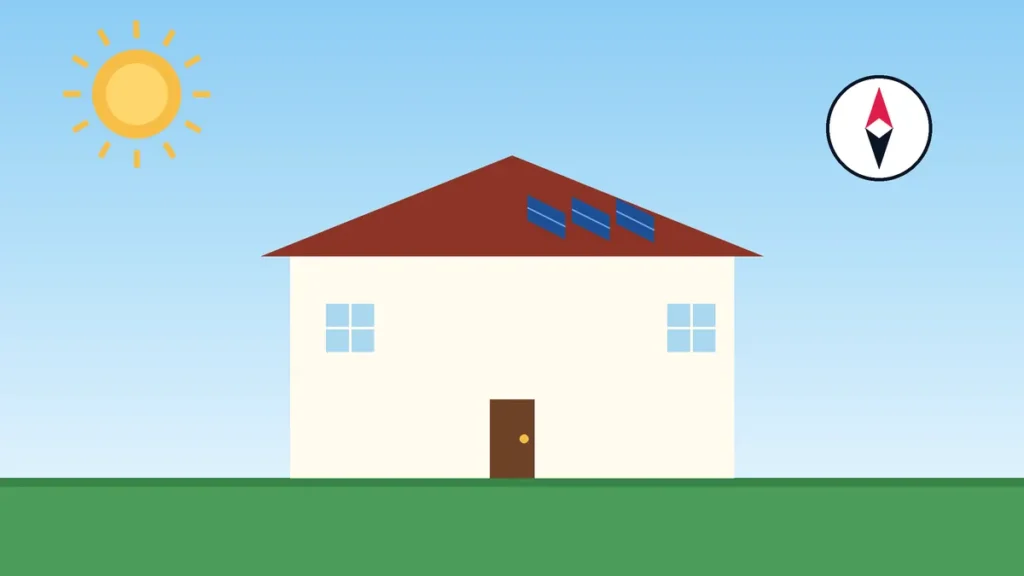
The short answer: grade your roof on five factors — direction (south = 100%, east or west ≈85%, north ≈65%), pitch (15–45° costs only a few percent), shade (the one factor with no mercy: heavy shade can cost 30–60%), age (under 10–12 years of life left means re-roof first), and material (shingle is the standard case; tile and shake need a specialist). Two neighbours with identical systems can differ by 30% in production on the roof alone.
Panels are commodities; roofs are individuals. Two neighbours with identical systems can differ by 30% in production purely because of what the panels sit on — its direction, pitch, shade, age and material. Installers assess all five factors on a site visit, but the conversation usually compresses them into “your roof is fine.” This guide unpacks each factor with the numbers behind it, so you can grade your own roof before anyone climbs on it, and know which flaws are fatal, which are fixable, and which barely matter.
Direction: the 35% factor
In the northern hemisphere, a south-facing roof plane is the benchmark — 100%. From there, annual production falls roughly as follows for a typical pitch: south-east or south-west ≈95%, east or west ≈85%, a split east+west array ≈80–85% (but spread across the day), and north ≈65% — worse if the pitch is steep, better if it’s shallow. Two qualifications matter. First, “85%” is not failure: an east-west roof on a household that’s home mornings and evenings can self-consume more of its production than a south roof whose owners are out all day, and under net billing self-consumption is where the money is. Second, direction interacts with time-of-use pricing — west panels produce into the expensive late-afternoon window, which is why utilities in the Southwest quietly love them. Use the direction selector in our Panel Count Calculator to see exactly what your orientation does to panel needs and output.
Pitch: forgiving, within limits
The ideal tilt roughly equals your latitude — 30–40° across most of the US — but solar is merciful here: anything from a shallow 15° to a steep 45° costs only a few percent versus optimal. Very flat roofs (under 10°) need tilted racking to shed water and dirt, adding cost; very steep roofs (over 45°) cost production and make installation slower and pricier. A special case: flat commercial-style roofs and patios/carports can be excellent solar platforms with ballasted tilt mounts — sometimes better than the house roof itself.
Shade: the factor with no mercy
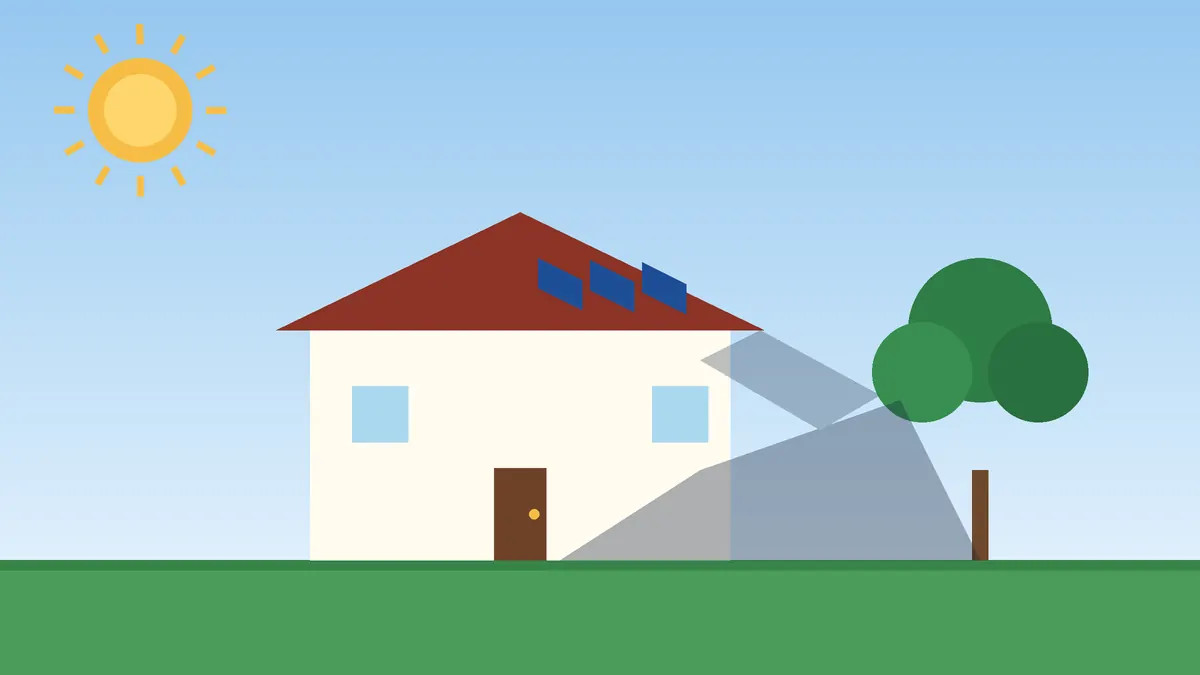
Shade is the one factor that punishes out of proportion. Because panels in a string behave like links in a chain, shading one panel can drag down its whole string — a chimney shadow crossing the array for two winter hours can cost far more than two hours’ worth of light. Modern mitigations are real: microinverters and DC optimisers confine shade losses to the shaded panels, and good designers route strings to keep problem areas isolated. But physics still collects its tax: a roof plane in heavy tree shade for much of the day can lose 30–60% and usually shouldn’t carry panels at all. Honest installers model shade with tools like Solmetric SunEye readings or satellite-based annual shading reports (e.g., a TSRF score). Ask for the shade figure per roof plane, in writing. “A little shade, no problem” is not a number.
Age and condition: the sequencing trap
Panels are warranted for about 25 years and will likely produce for 30+. If your roof covering has less than 10–12 years of life, you face a mid-life removal and reinstallation — typically $1,500–$3,000 — plus the risk that the original installer no longer exists to do it. The correct sequences are: re-roof first, then solar (and ask the roofer and installer to coordinate flashing and warranty terms), or confirm in writing that the roof genuinely has 15+ years left. A related trap: some roof warranties are voided or complicated by poorly documented penetrations, so use an installer whose roof work is warranted in writing and whose mounting system is certified for your covering.
Material and structure
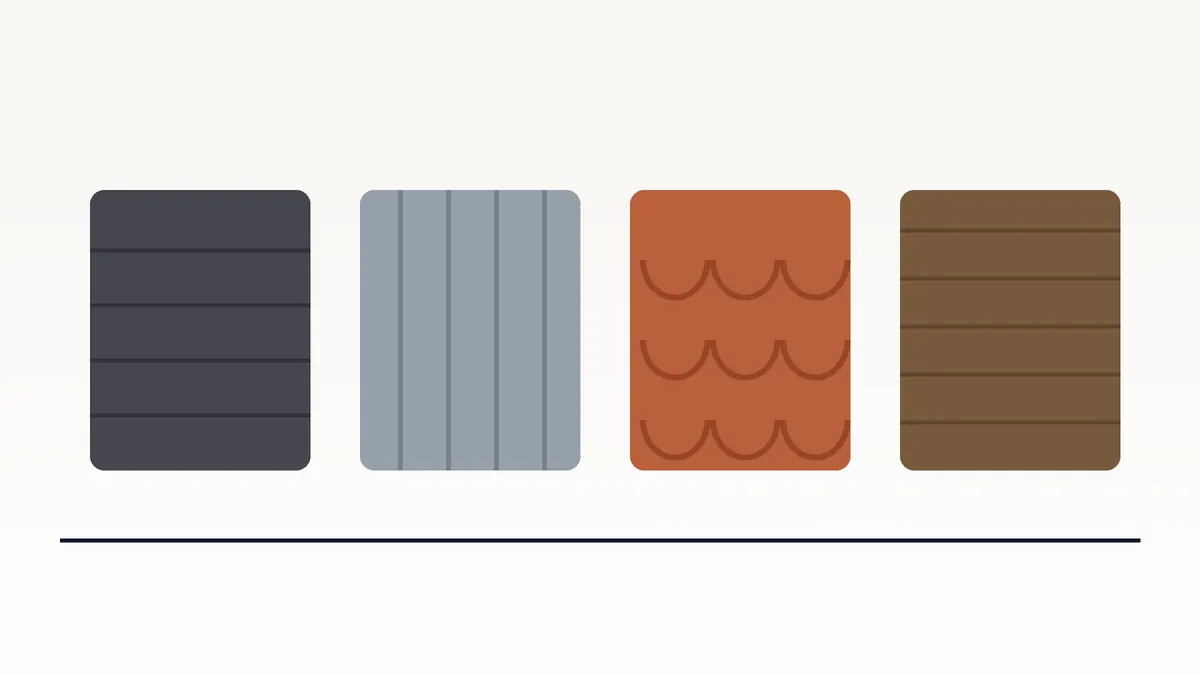
- Asphalt shingle — the easiest and cheapest to mount; the standard case all pricing assumes.
- Standing-seam metal — excellent: clamps attach without penetrations, and a metal roof’s 40+ year life matches solar perfectly.
- Tile (concrete or clay) — workable but slower and pricier (tiles are lifted, hooked and sometimes cut); budget a few hundred to over a thousand dollars extra and insist on an installer experienced with tile.
- Wood shake, slate, flat built-up roofs — specialist territory; some installers decline, others charge accordingly. Get the method in writing.
- Structure — panels plus racking add only ≈3–4 lbs per sq ft, which most roofs handle easily, but older homes, long rafter spans and previous sagging trigger an engineering check; a required structural upgrade adds cost and time.
Space, setbacks and the “usable” lie
Fire codes require clear access pathways and setbacks from ridges and eaves, and vents, dormers, skylights and chimneys fragment planes. As our panel count guide explains, plan on ≈21 sq ft per panel rather than the panel’s bare 17.5. A roof that measures 800 sq ft might honestly host 550–600 sq ft of array. Sales drawings sketched on gross area shrink at permitting — after you’ve signed. Measure your clear rectangles, or require the installer to commit to the final panel count and production estimate contractually.
Grading your own roof
- A-grade: south (or split east-west), 15–40° pitch, minimal shade, shingle or standing-seam, 15+ years of life, 500+ usable sq ft. Buy with confidence at a fair $/W.
- B-grade: one flaw — east/west only, moderate morning shade, 10–15 years of roof life. Solar still works; model the actual losses and negotiate on price.
- C-grade: two or more flaws — think hard, get the production estimate guaranteed in writing, and compare against a ground mount if you have land.
- D-grade: steep north, heavy shade, or a roof at end-of-life. Fix the roof first, consider ground mount or community solar, or wait — a bad platform makes even cheap panels expensive.
The roof is the one part of a solar system you can’t upgrade later without paying twice. Spend your diligence there, and the panels — the easy part — will take care of themselves.
Grade your roof in numbers: the Panel Count Estimator takes your usable area and direction and returns the real panel count and production. Then size the system properly with the System Size Estimator.